Quick links
About this guide
The general capabilities are embedded within specific learning activities and can be identified with the following icons:
The general capabilities are embedded within specific learning activities and can be identified with the following icons:
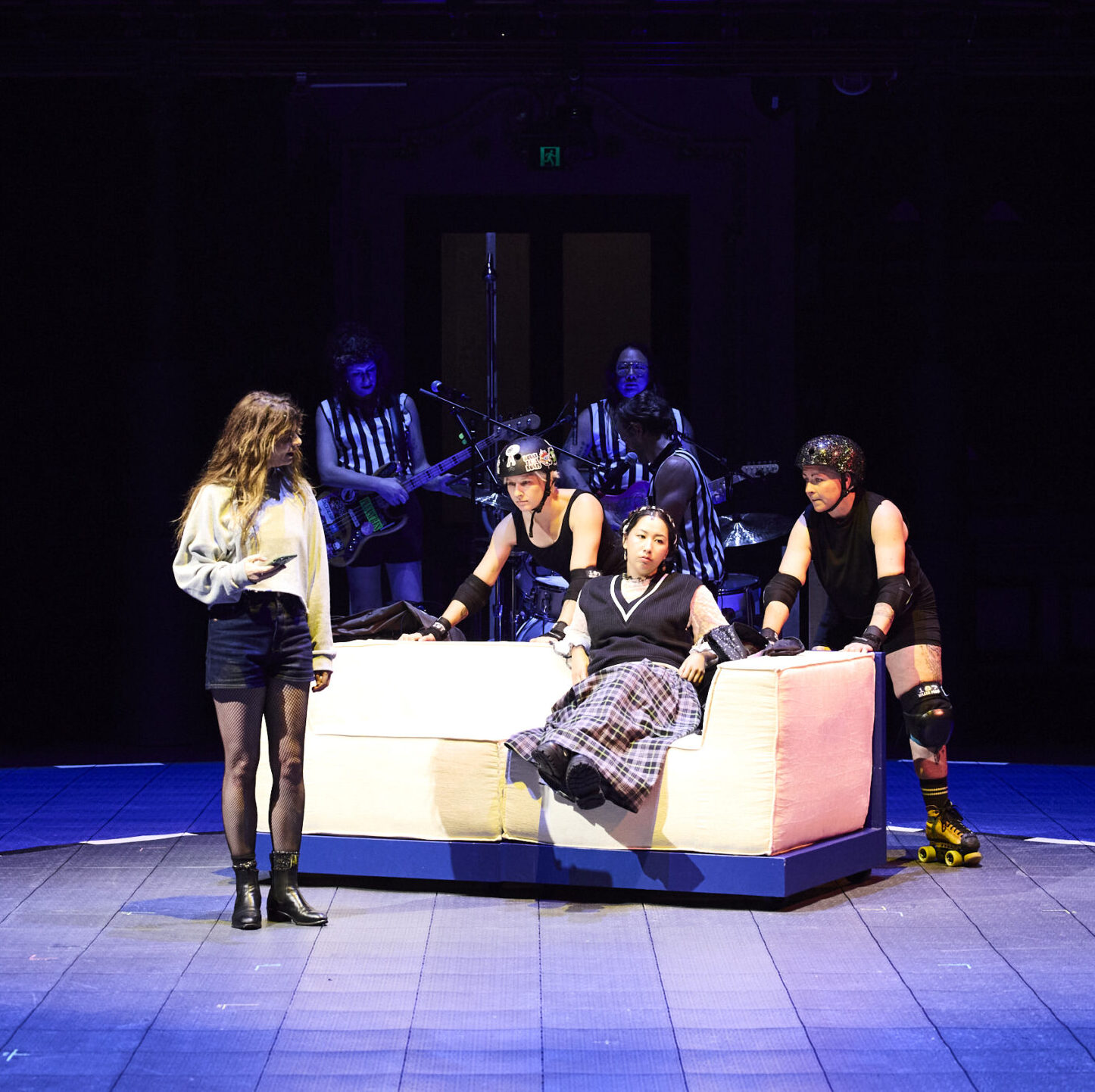
A hilarious and heartfelt mother-daughter tale smashes up against the exhilarating, rough and radical world of roller derby. Real players. A live band. Take a seat, trackside.
At 16, Billie is stuck, smack in the middle of the pressure of growing up and the attempt to hold it all together. To make matters worse, she and her mum have just moved to a regional town in the centre of nothing where they have to make their own fun. It’s always been just the two of them. Them against the world. Them dancing in the supermarket. Them getting the hell out after the Very Bad Thing. But Mum’s not responding well to this ‘being still’ business. She’s spiralling through her own rebellion, until she finds her freedom… in skates and sweaty elbow pads.
Co-created by Clare Watson and Virginia Gay, Mama Does Derby is a story about stacking it and getting back up.
An immersive riot of theatre. Blood pumping, fierce and funny as. This is theatre that hits different.
Comprehensive Study Guides are now available for Yr 7-8, Yr 9-10 and Yr 11-12.
Find below links to download the full Study Guides for teachers.
Did you know Mama Does Derby is loosely inspired by Clare Watson’s real-life story with her daughter, Ivy.
Clare pitched the idea to Writer, Virginia Gay - a long-time collaborator who has known Ivy since she was little.
Roller derby is a sport full of tenacious, dynamic humans who work together as a team… honing their skills, pushing themselves, constantly communicating, making the conditions just right for their jammer to fang it. The making of Mama Does Derby has felt just the same. This team is simply stellar – from every skater, actor, musician to our Windmill wonders, our courageous crew and creatives… this enormous and wonderful team have demonstrated the power of community on the daily. Our community includes the brilliant teams of Adelaide Festival, Sydney Festival and Brisbane Festival, MFI and the Creative Futures Fund.
Mama Does Derby is dedicated to the memory of Sarah Strong-Law (Barrelhouse Bessy) who is the founder of roller derby in Adelaide in 2007. Barrelhouse Bessy chose to create a community whose ethos is ‘daggy and endearing’ we hope that we’ve met that brief. And we hope that Mama Does Derby will inspire you to be your weird, wonderful self, possibly strap on some skates and most importantly give to your community. As Frida Kahlo says, “everything changes, everything moves, everything revolves, everything flies and goes away”. Life is short… let’s get amongst it.
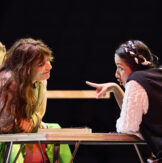
Maxine and Billie represent a non-traditional family unit; not only is Maxine a single mother raising a daughter, Billie and Maxine have also switched the traditional roles and responsibilities of parent and child.
Billie is sixteen and navigating the challenges of adolescence and the anxieties that come with moving to a new place, all while taking on the adult responsibilities in the family. Maxine a rebellious free spirit who has never been good at staying in one place. While Billie and Maxine are closely intertwined, boundaries between the both become blurred.
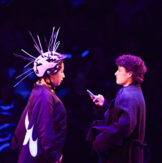
Billie is ‘hardly a child’ but not yet an adult. As she learns to drive and becomes more aware of the world around her, everything begins to feel heavier and more complex – there’s climate change, cost of living, political uncertainty, and a future that feels stacked against her.
This transitional period is unsettling, marked by unexplained nightmares. Having grown up in an intensely close relationship with her mother, Billie must also learn to overcome her nightmares, form friendships, and experience life without Mama constantly by her side.
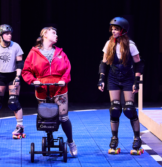
After moving to a quiet country town, Maxine and Billie are no longer on the run and are forced to sit with the stillness of their new life. This is unsettling for Maxine, who is used to constantly moving and doing. Her chance discovery of roller derby awakens parts of her identity she had long set aside, unlocking both her inner strength and a renewed sense of belonging.
Meanwhile, Billie struggles to adjust to her new school. Shy and withdrawn, she spends much of her time drawing, lost in a private world of dark scribbles and Frida Kahlo, keeping to herself until she befriends Hux. Charismatic and self-assured, Hux encourages Billie to step out of her shell and begin engaging more confidently with the world around her.
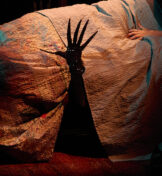
The co-creators were inspired to explore the anxieties that young people have about living and growing in the world: sustainability, the cost of living, political and social unrest, and uncertainties about the future all play a part in Billie’s fears and anxieties. These are presented through a variety of physical symptoms such as sleep paralysis. Maxine’s need to keep moving is a strategy she has employed to avoid having to face and deal with her own past traumas.
In Mama Does Derby, mental health is not portrayed as something that can be ‘fixed’. Instead, mental health is presented as something that is an integral part of the characters, and which makes them who they are; that by acknowledging, naming and accepting their anxieties, they are able to live, survive and thrive.
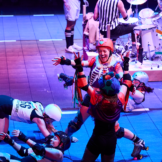
Threaded through the play is the roller derby metaphor: stacking it, getting up, and doing it again with support. This physical language mirrors the emotional journeys of both characters. Derby reframes failure as part of growth. It shows that resilience is learned collectively — through community, repetition, and the willingness to be caught when you fall.
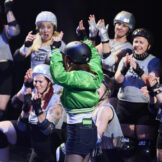
Billie and Maxine arrive in a new town isolated in different ways – Billie through anxiety, Maxine through a lifetime of restlessness. Billie is desperate for security and stability. Billie’s friendship with Hux gives her a quiet space to be seen without pressure or performance; Hux’s confidence in their identity is an invitation for Billie to let her guard down and find authentic connections. Meanwhile, Maxine finds a vibrant, energetic community through the roller derby team. Derby culture is known for being more than a sport – it’s a movement and a community, encouraging players to be brave, gutsy, resilient and stronger because of what they bring to and gain from their team. Both characters learn that belonging is not created through intensity or dependence, but through trust, honesty, and shared experiences.
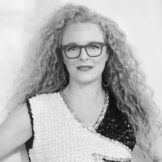
Clare Watson is a multi-award-winning director and theatre-maker. In 2023, she was appointed Artistic Director of Windmill. Her first work for the company, Hans and Gret, enjoyed a sell-out season at the Adelaide Festival.
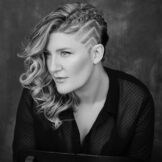
Virginia Gay is an award-winning actor, writer and director. She recently starred in Colin From Accounts, SBS’ Safe Home, Savage River and Thank God You’re Here. She was Artistic Director of Adelaide Cabaret Festival 2024/25 and received a Logie nomination for most Outstanding Supporting Actor for After The Verdict.

Jonathon is an award-winning designer. He has designed for major theatre companies including Windmill, Sydney Theatre Company, Melbourne Theatre Company, Queensland Theatre, State Theatre Company of SA and more.
In 2023, he won an APDG Award for Beep and Mort Series 1. He designed Windmill’s feature film, Girl Asleep and won the ACCTA Award for Best Costume Design with a nomination for Best Production Design, as well as two APDG Awards.

Larissa McGowan is an award-winning Australian dancer and choreographer. An independent choreographer and movement consultant she was a longstanding performer and Associate Choreographer with Australian Dance Theatre (ADT) she is currently Associate Artist for Restless Dance Theatre.
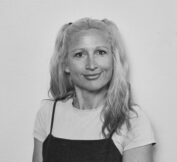
Lucy is an award-winning lighting designer and artist. Lucy has designed for companies including Black Swan, Sydney Theatre Company, Malthouse, Rone, Juluwarlu Group, Yirra Yaakin, Griffin Theatre, WA Ballet, Barking Gecko and more.
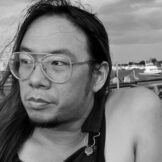
Joe Paradise Lui is a submerging artist who puts the mid in mid-career. Joe is the winner of the 2013 Spirit of the Fringe award. It has won no awards since. Joe creates experimental theatre and performance works as Renegade Productions. Joe was the artist in residence at the Malthouse Theatre for 2023/2024.

Luke works across all areas of sound including sound design, foley, sound effects editing and music composition. He has worked nationally and around the world. In 2013 he received a Helpmann Award nomination for Best Sound Design of Windmill’s School Dance.

Ivy Miller is an emerging designer and stage manager currently completing a Bachelor of Fine Arts (Production) at the Victorian College of the Arts (VCA). Recent credits include Set Designer on Cendrillon (dir. Johanna Allen), Stage Manager on The Other Shore (dir. Bernadette Fam) and more.
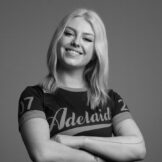
Maddy (AKA BB Gun) has been a derby player since 2008, when she watched Adelaide Roller Derby’s very first season with her dad. She would skate around the track at halftime, soaking up skills from the league’s pioneer, the beloved Barrelhouse Bessy. Maddy came full circle and joined Adelaide Roller Derby in 2023 and now skates with The Wild Hearses. Maddy skates as BB Gun, her own little homage to the late, great legend and friend Bessy.
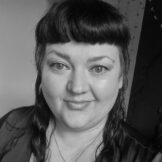
Jude Gaffney has been part of Roller Derby’s flat track revival since its grassroots beginnings in Australia, helping to found Adelaide Roller Derby back in 2007. For Jude, Derby has always been for everyone, no matter who you are or where you come from, there’s a place for you on the track and in the community.

Amber trained at Flinders University Drama Centre and received the Adele Koh scholarship from the Stella Adler Company and SITI Company in New York. Theatre credits include Girl Asleep, School Dance (Windmill), Orlando, Master & Margarita, Stop Girl, Dance Nation, Bliss, Atlantis, Twelfth Night and more.
Amber has received two Helpmann Awards for her role in Girl Asleep (Belvoir/Windmill) and School Dance (Windmill).

Elvy-Lee Quici (She/Her) is an Italian-Vietnamese, Australian actor, performer, writer and maker based in Adelaide-Melbourne. Since graduating from Flinders Drama Centre in 2022, she has starred in Wild Orchids, a queer coming of age short film, which she co-wrote and co-directed, and she was most recently seen in Single Asian Female (State Theatre Company South Australia), Dance Nation (Adelaide Fringe Festival) and more.
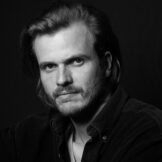
Antoine who also produces under the name Lazy Susan, has lived and worked in Adelaide throughout his professional career and enjoyed work amongst all tiers of the local arts community as both a performer and sound designer. Between supporting independent works in film and theatre, to playing mainstage shows in the Adelaide Festival and touring nationally, he has enjoyed in equal measure the intimacy and expansiveness of these different scales of work.

Annabel is a queer performer, director, arts worker and Intimacy Coordinator. She has studied with Flinders University, UniSA and Intimacy Directors and Coordinators (USA). As a performer, Annabel has worked with State Theatre Company South Australia, Theatre Republic, Vitalstatistix, Sydney Theatre Company, ArtPop, Windmill Theatre, AKA Productions, ActNow Theatre and more.
She has assistant directed with State Theatre Company South Australia and gained awards in 2024 and 2025 Adelaide Fringe Festivals for shows under her direction.
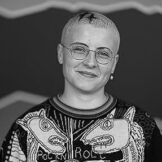
Aud Mason-Hyde is a young queer trans actor, activist and artist. They recently featured in international feature film Jimpa, which premiered at the Sundance Film Festival in 2025, followed by the Adelaide Film Festival. In 2023, they co- founded TRANSMEDIUM, alongside filmmaker Claud Bailey. Credits include independent feature 52 TUESDAYS, the ABC six-part series F*&#ING ADELAIDE, and the 2022 short film RIGHT HERE.
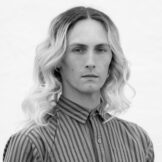
Benjamin Hancock aka Bendy Ben is an award-winning performance artist who blurs boundaries between dance, drag, cabaret, burlesque, and club scenes. Known for their inventive use of camouflage and masks, Bendy Ben’s personas embrace parallel masculinities and femininities, celebrating queer fluidity and transformation. In 2024, Bendy Ben was crowned Mx Burlesque Victoria.
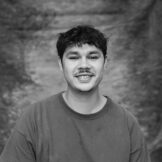
A graduate of Adelaide College of the Arts, Dylan has worked with State Theatre Company South Australia, Windmill and Sydney Theatre Company. In 2019 he toured internationally with The Secret River. In 2024 he toured nationally with Windmill Theatre Company’s renowned production, Grug.
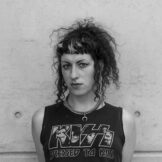
Calliope Jackson is a bass player in show, whom Co-creator, Clare Watson met on a dance floor. Calliope is also in a band called Mortal Ambition.
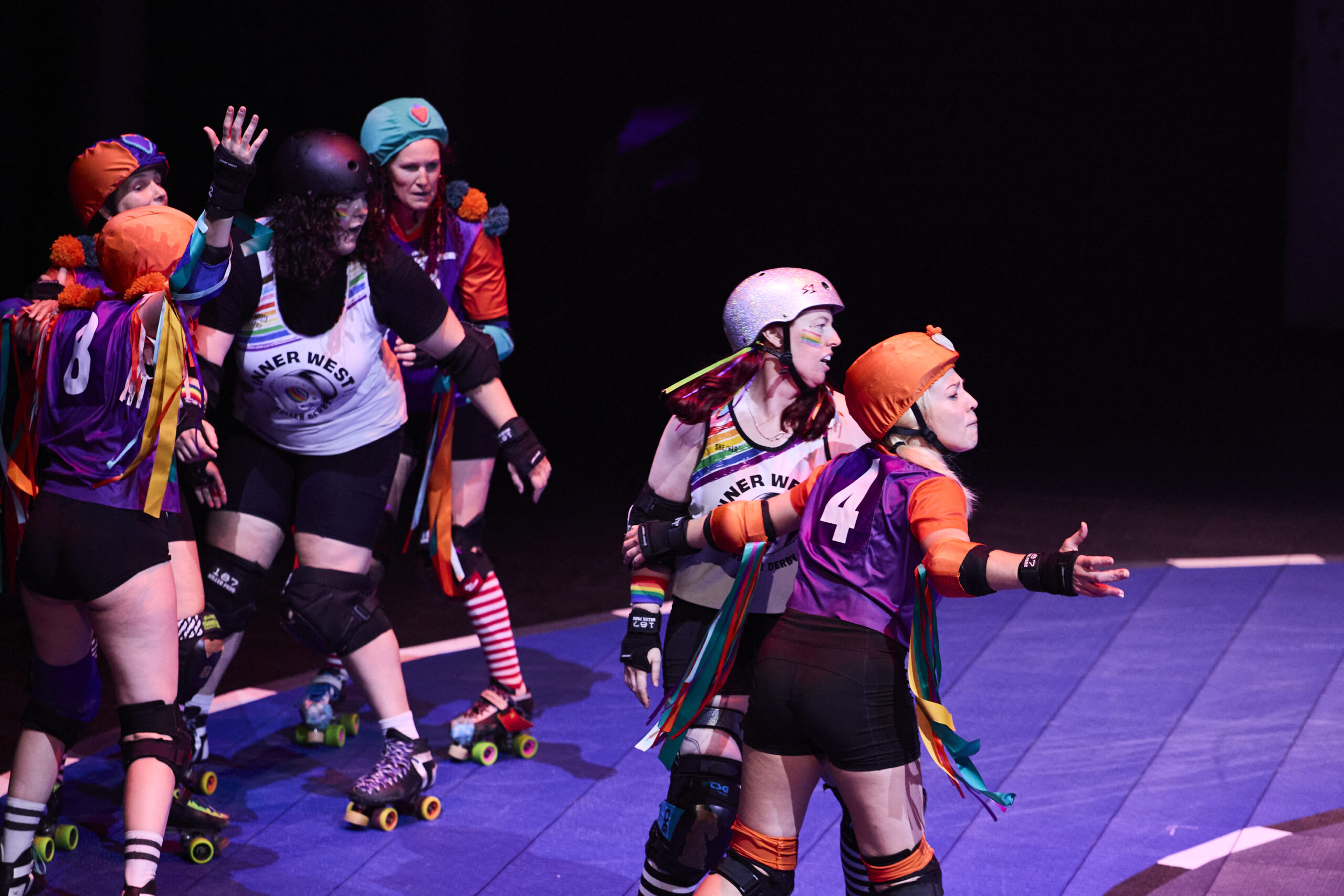
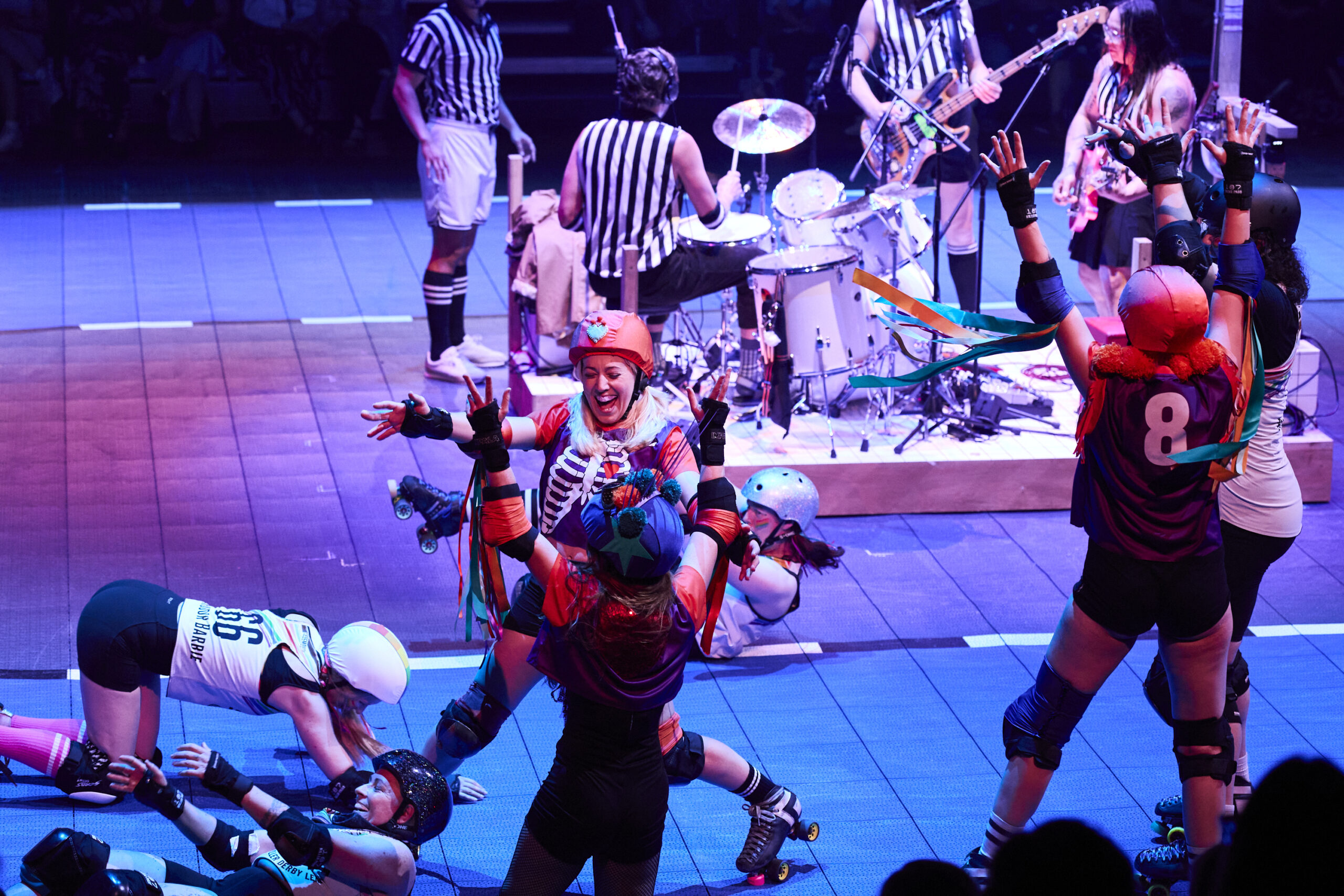
Did you know Mama Does Derby features real roller derby players and a live band.
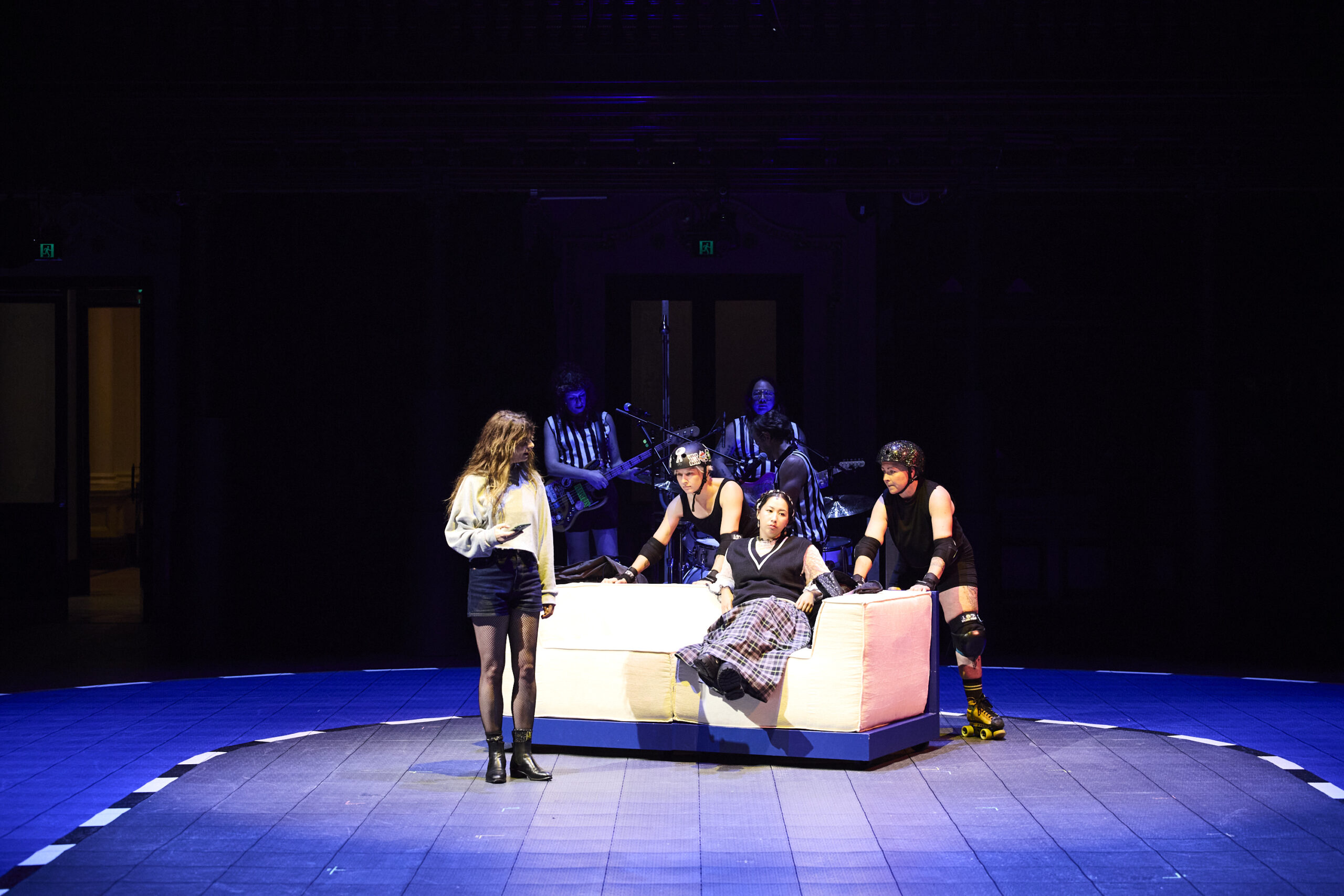
The roller derby players physically move the set as part of the performance.
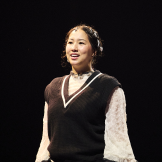
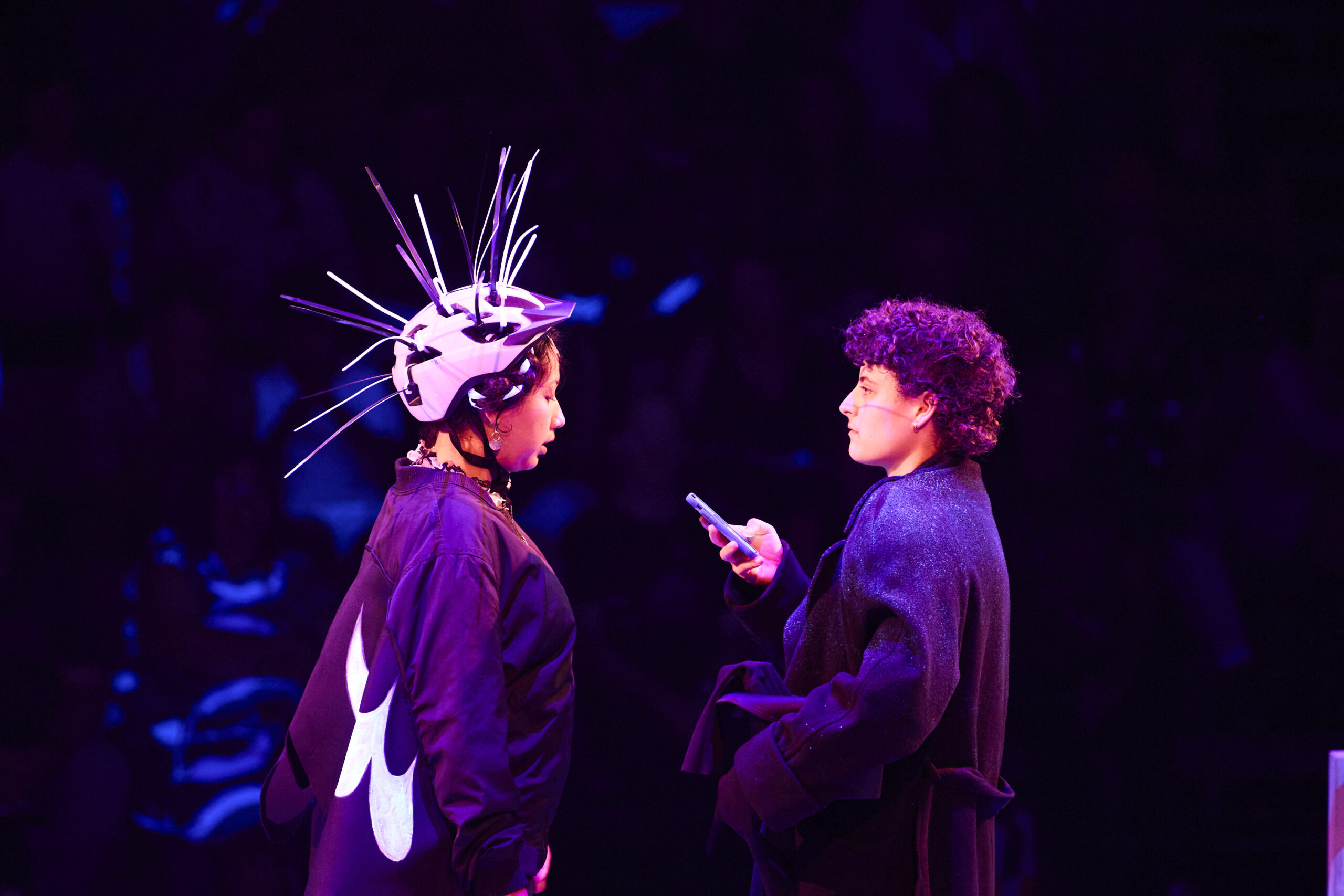
Daughter (Billie). Almost sixteen, creative, responsible and riddled with anxiety. Loves Frida Kahlo. She’s worried about the future, about Mum. She’s overwhelmed by the chaos around her. At home, across the world… the climate, the conflict, the expectations. She knows these thoughts are too big for her age. She just wants to be still. Mum is her best friend.
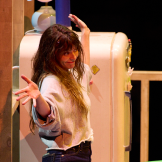
Maxine. Single Mum. Total ratbag. Outrunning her fears, her troubles, she’s always moving, always up for an adventure. She’s filled with joyful, chaotic, teen-like energy. She’s a serial hobbyist, someone who dives passionately into projects but rarely sticks around to finish them. Billie is her best friend.
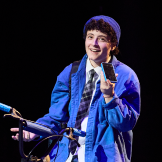
Billie’s new friend – the alternative kid at school. Progressive and unapologetically themselves. It feels like they’ve kind of cracked the code on having a good time. Always on a skateboard or BMX, skidding through life with confidence and just enough edge to make it look effortless… to Billie anyway.
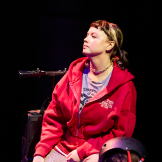
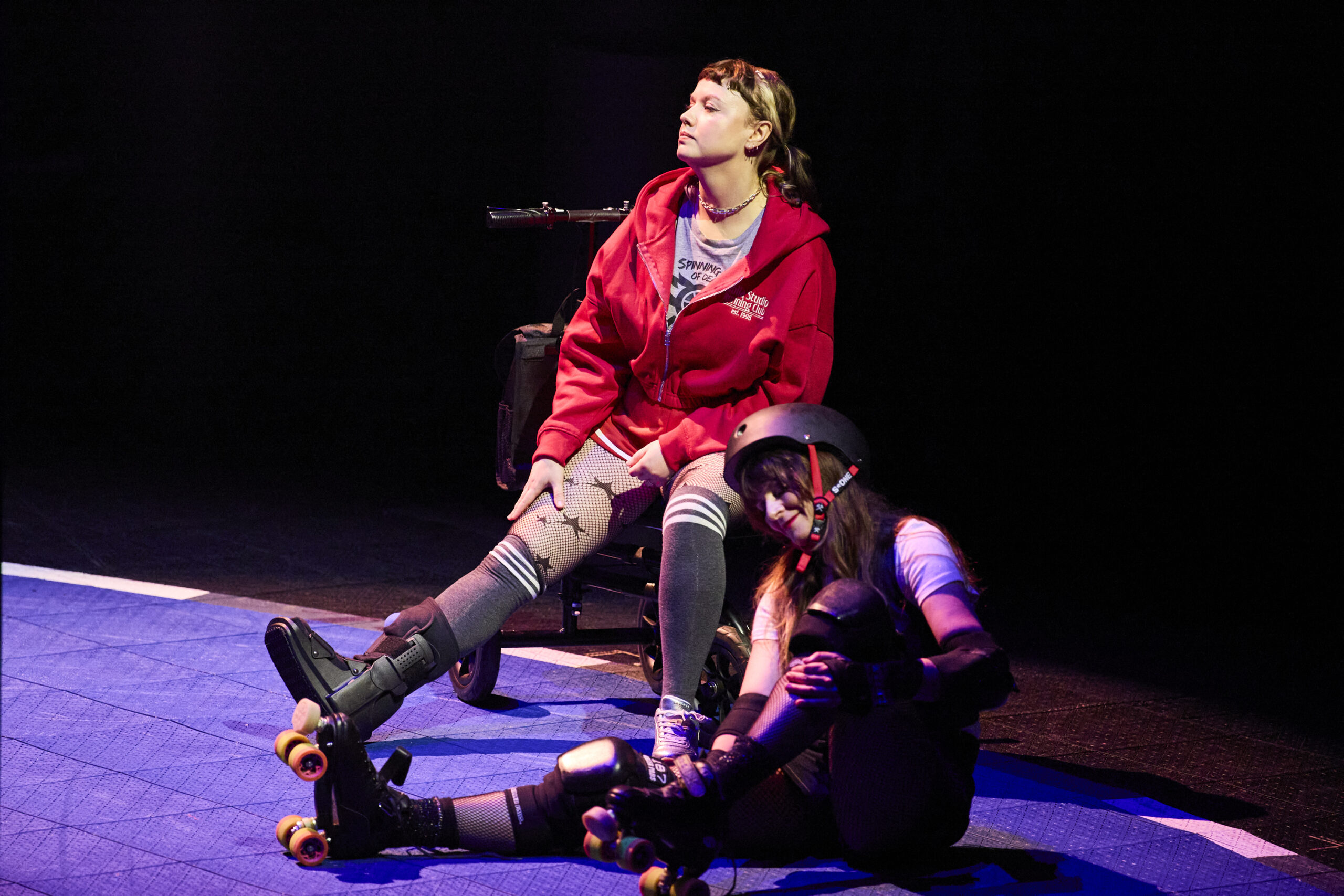
Maxine’s first friend in the derby team. Wild, fearless. Drew won’t let a torn tendon keep her from being part of the action. Big-hearted and brutally honest, she’s the kind of friend Mum needs right now. She embodies derby: loud, physical and competitive, but also ready to back her teammates on and off the track.
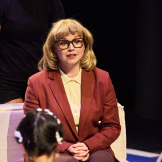
A middle-of-the-road, small-town therapist. A bit mediocre, but well-meaning and ultimately gives helpful advice to Billie and Mum. Genuinely cares.
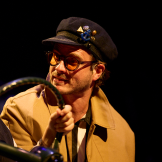
The next-door neighbour of unplaceable origin and relentless gloom. Also Billie’s driving instructor. They’ve got some stories that’s for sure – whether we want to hear them or not is another question.
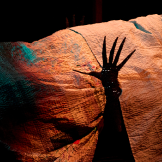
Billie’s nightmares come to life. A sleep paralysis demon. Flexible is an understatement. Terrifying, intrusive, conspiratorial and deeply unsettling. Deep (deep) down they are there to keep Billie safe, whether she wants them to or not.
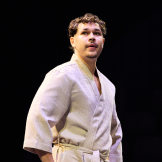
Mum’s latest boyfriend. Painfully beige both in personality and attire. Still waters run deep with Dave. Billie doesn’t trust him at first.
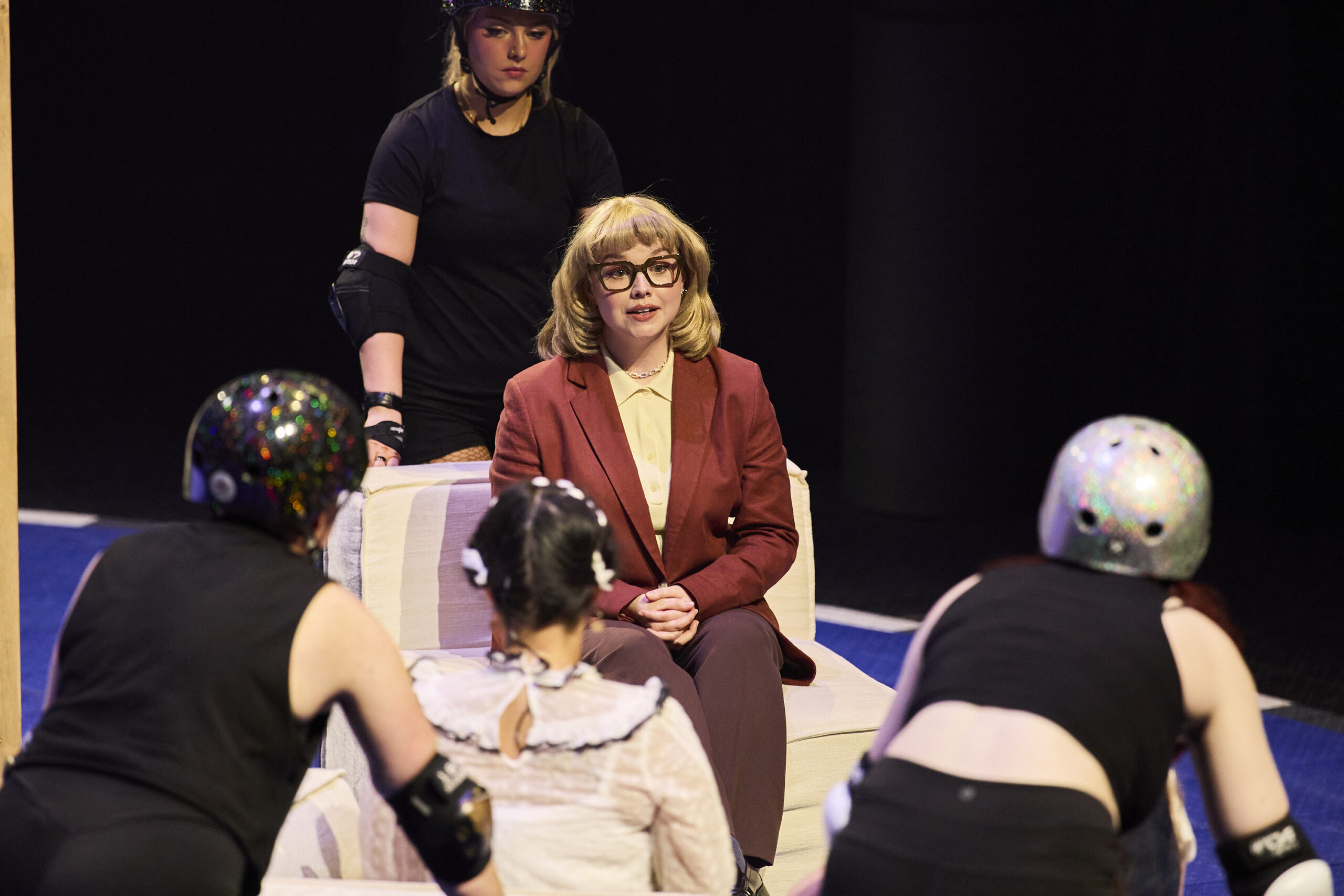
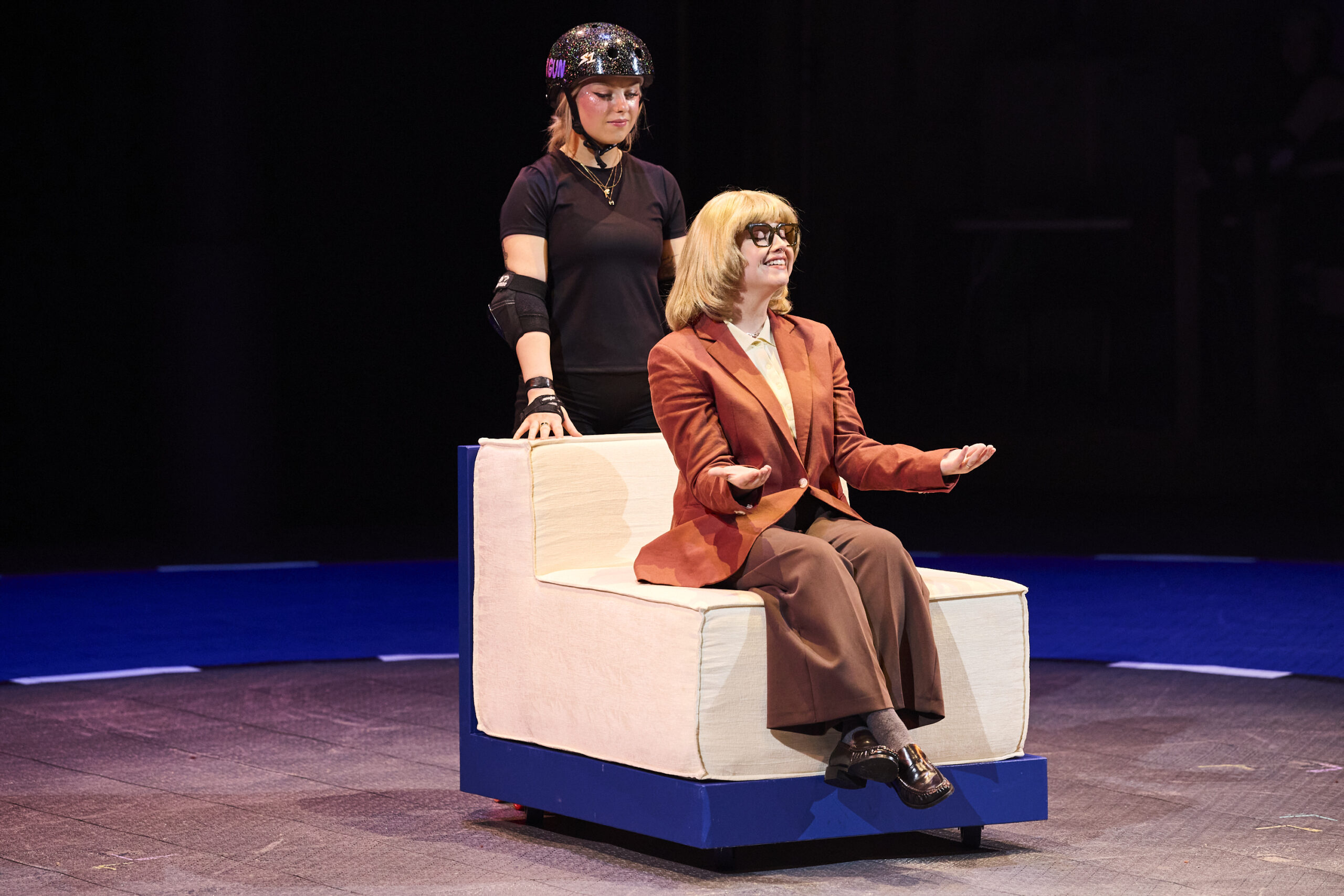
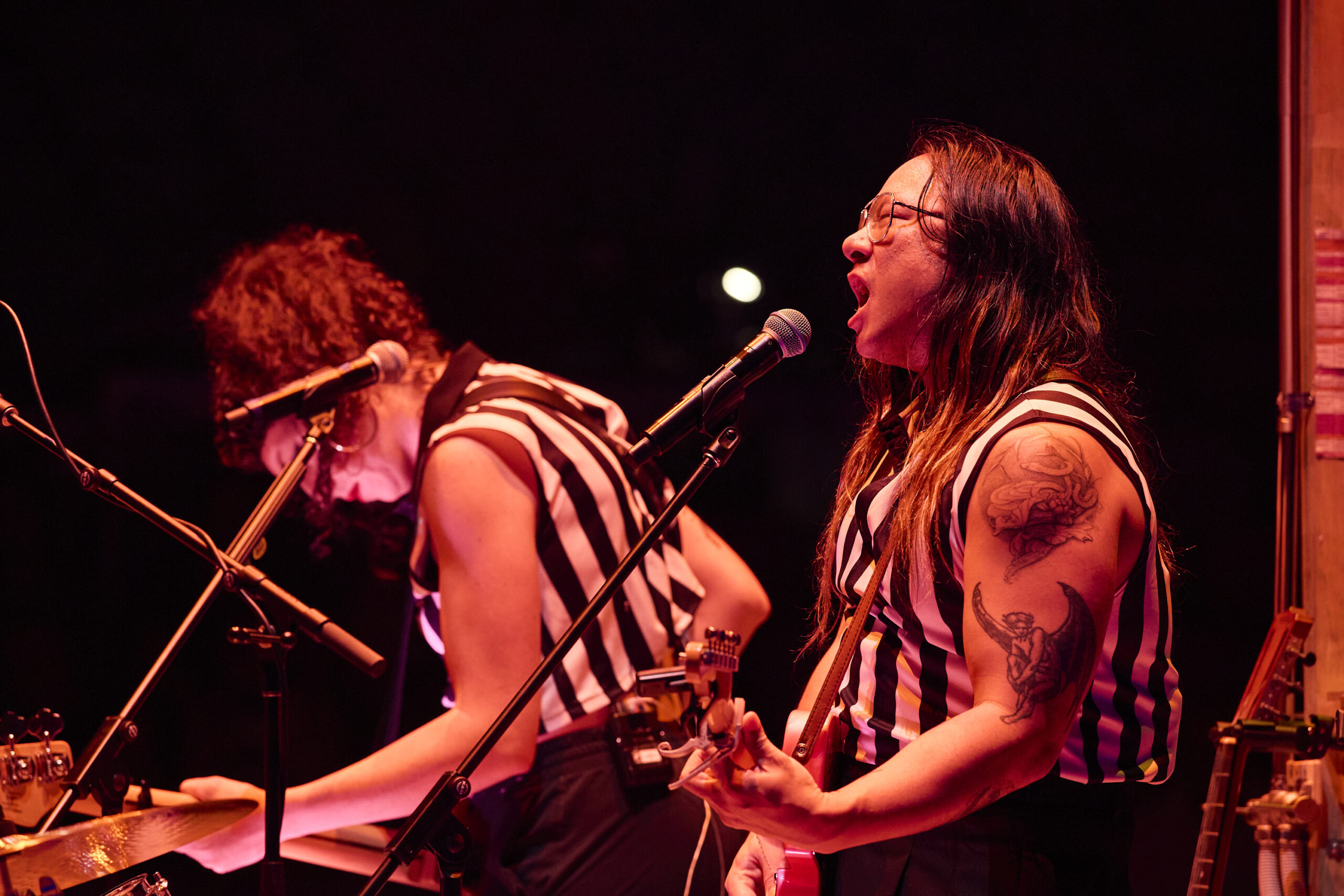
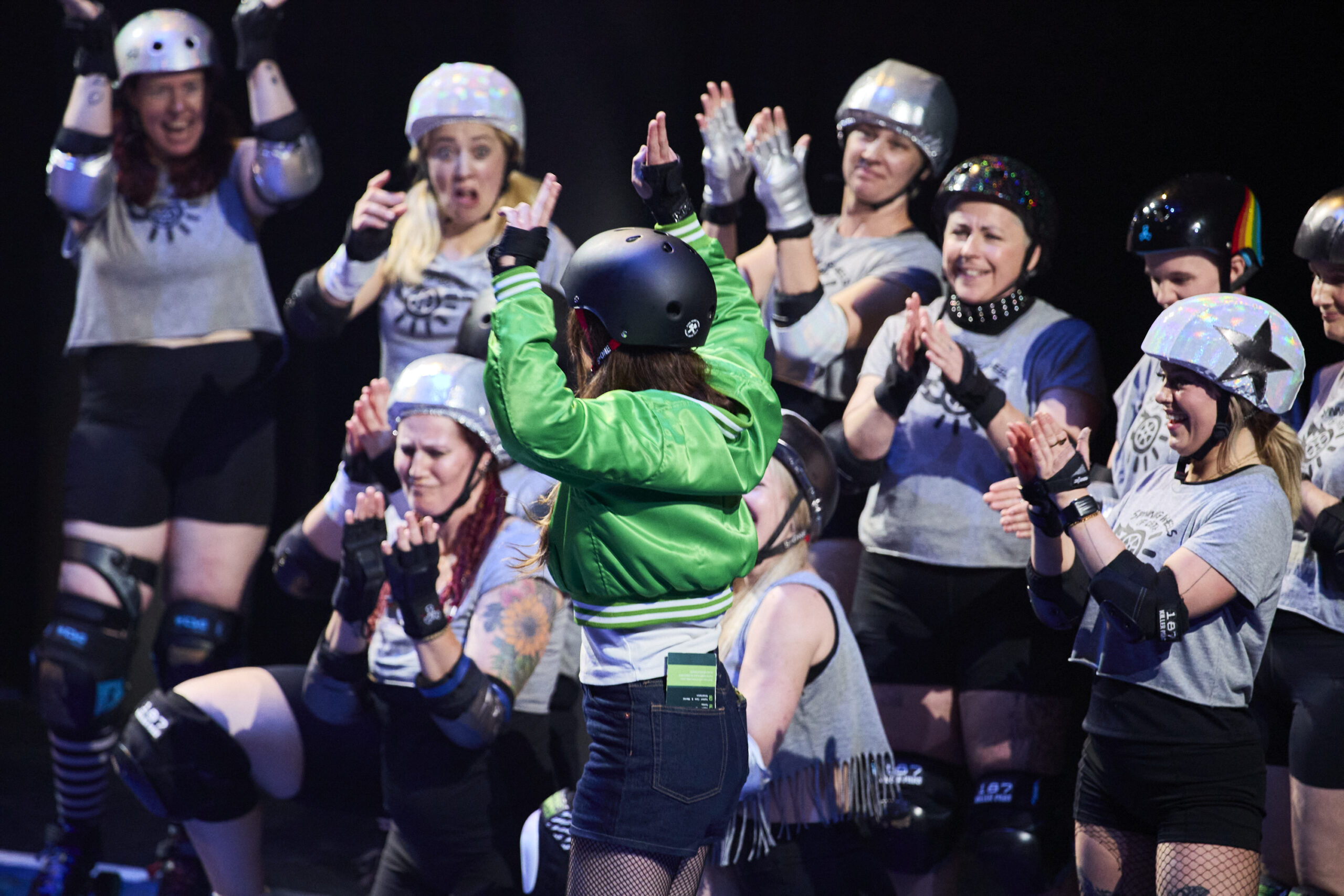
What was your starting point for designing Mama Does Derby? And which do you tend to kick off with first – set or costume?
I would usually start the design process thinking about the world/set first and then inhabit it with the characters. The characters give really big clues on what needs to be in the set, so in a way they are both being designed at the same time. The starting point for this production was the Derby track, we knew we needed to incorporate that from the beginning, so in a way this became the nucleus of the design and everything else orbited on top of it. Clare had the idea that all set pieces were on wheels from the get go, so we really held onto this concept and ran with it.
Roller derby has a bold, colourful and DIY visual culture. How did the aesthetics of roller derby influence your design choices?
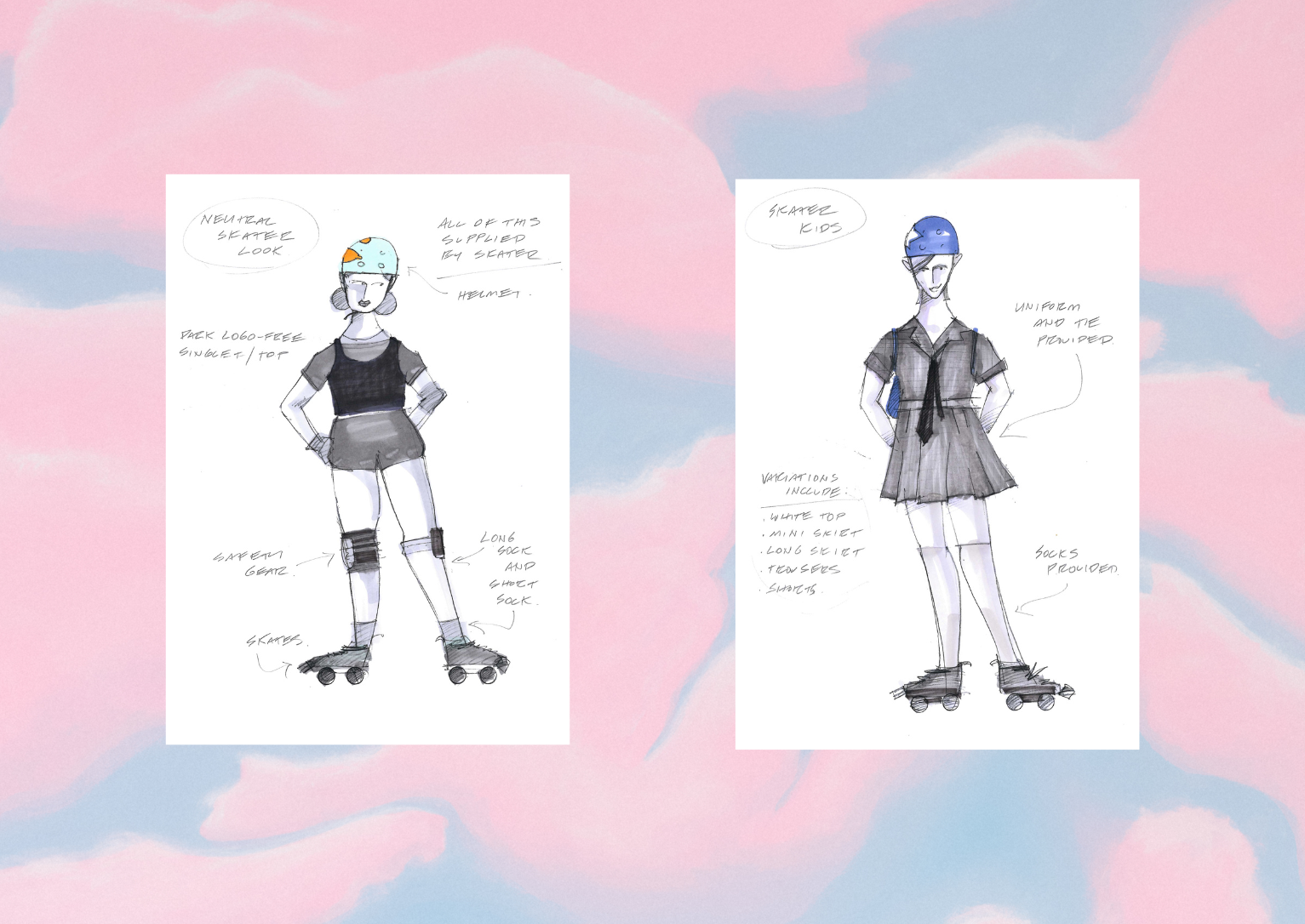
Derby ‘s unique aesthetic really came through in the costumes. We tried to incorporate the DIY craftsmanship into the final team look, and leaned into the homemade. The final look is based on the doodles that Billie has been drawing in her art journal, images that link to Frida Kahlo and her love of sacred hearts and skeletons. The painting of the family hearse by Billie is a classic derby-craft move, do it yourself! Billies act of painting the car and in turn beautifying it is a bold act of reclaiming something that was once shameful and transforming it into a work of art!
What as the biggest challenges unique to the show, particularly around traverse seating?
Because Mumma Does Derby is a play set on a sports track, it means the show has audience on two sides, we call this traverse mode, and we have to make sure everyone can see the action, even if it is different from one side to the other. Always checking sightlines to make sure the furtherest seats on each audience bank can see the action. Sometimes you end up with action happening in peculiar spots, but if the audience can see, that’s number 1. Traverse also offers some opportunities to give everyone really dynamic views, like the spinning house in the halloween scene. The seating also gives the majority of the audience an elevated view, something that we only really noticed when we were in the theatre, it looks great when you can see the other side of the track in the action scenes.
What do you hope audiences subconsciously feel or understand about the characters through your design, even if they can’t quite name it?
I think the way the set shifts and transforms, built and un-built and moves around the space links to the characters shifts and changes within our story. The rooms and the house are also new things to Mum and Billie, we the audience get introduced to parts of the house as the characters do, hopefully taking us on that feeling of moving in. Also, all of our characters have a mirror or a binary side to them, even Nathan and Weird Neil, there is a hard and soft side, and a strong and a gentle side. It’s all a bit like Derby! Our space can be really dynamic and fast and then small and gentle.
What would your roller derby name be?
Johnny Crash
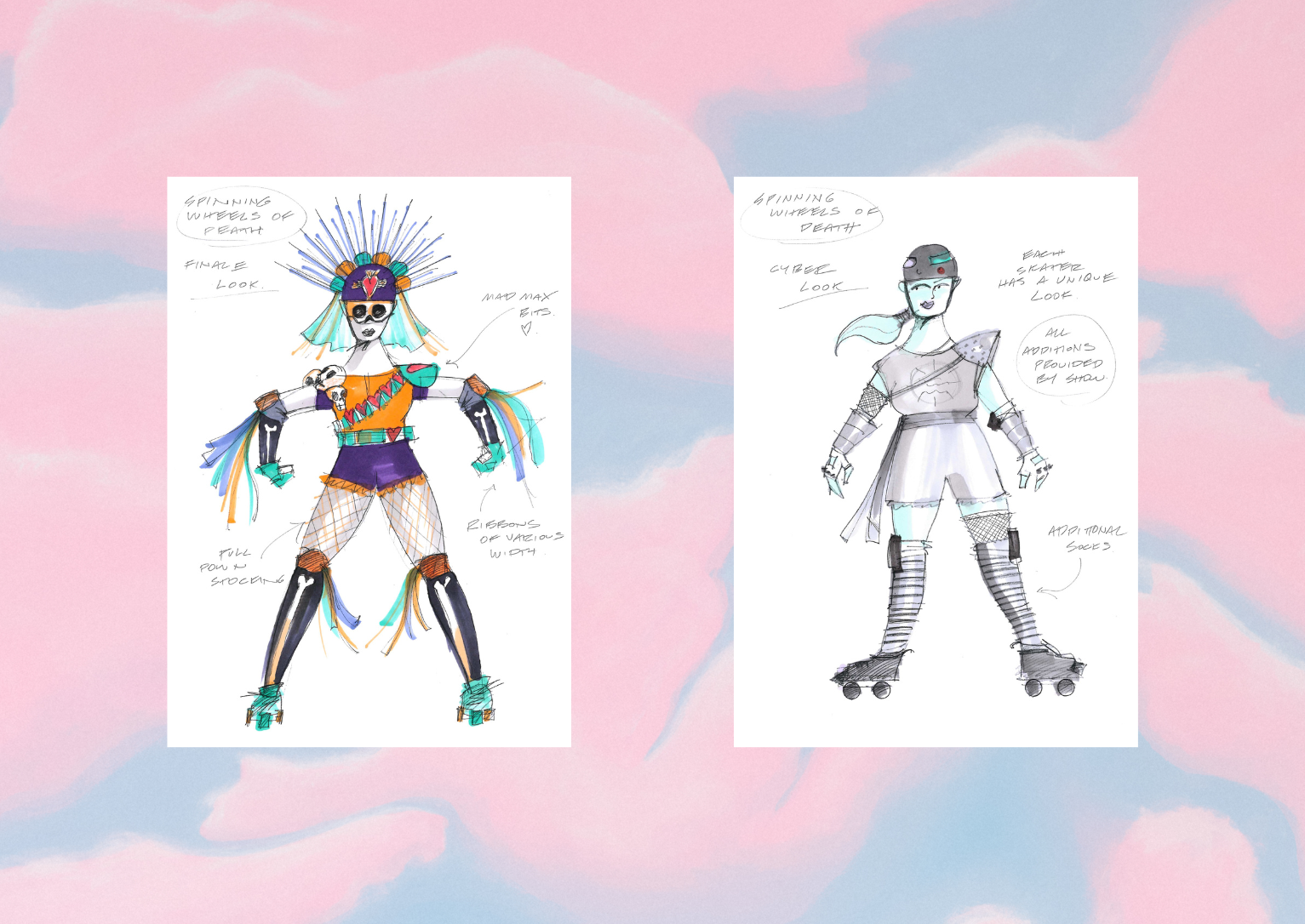
Students viewing live theatre can experience feelings of joy, sadness, anger, wonder and empathy. It can engage their imaginations and invite them to make meaning of their world and their place within it. They can consider new possibilities as they immerse themselves in familiar and not so familiar stories.
Watching theatre also helps students understand the language of the theatre. It is part of the holistic approach to developing student literacy.
While viewing the show, students’ responses can be immediate as they laugh, cry, question and applaud. After the performance, it is also extremely valuable to provide opportunities for discussion, encouraging students to analyse and comprehend how these responses were evoked by the creatives through the manipulation of production elements and expressive skills.
Before coming to see Mama Does Derby with your students, explore the different roles involved in making a performance happen, from writing, directing and performing, to lighting, projection, set and costume design and construction.
Visiting the theatre is very exciting. There are some guidelines that students can follow regarding appropriate behaviour in the theatre and during the performance that will allow their visit to be even more memorable. Prior to visiting the theatre prepare students for what they will experience as an audience member using the following questions:
Where can you sit?
An usher (front of house – FOH) will help you find your seat so you need to follow their directions.
How do you know when the performance begins?
The lights will dim and/or you might hear a voice-over or sound. That’s your cue that it has begun and it is time to settle and be quiet.
How is going to the theatre different to going to the movies or watching television in your loungeroom?
Something unique to theatre is that it is ‘live’ and the actors are real. You can hear and see the actors, and they can hear and see you.
What is the relationship between the audience and the performers?
As the actors can see and hear you, your responses to the performance show your appreciation to the actors. So, show your enjoyment!
Final points to remember:
Avoid eating in the theatre and wriggling in your seat;
Cover coughs and sneezes;
Don’t film or photograph the performance due to intellectual ownership.
Produced by Windmill Production Company. Compiled by drama education specialist Aldo Longobardi.
The activities and resources contained in this document are designed for educators as the starting point for developing more comprehensive lessons for this work.
© Copyright protects this Education Resource. Except for purposes permitted by the Copyright Act, reproduction by whatever means is prohibited. However, limited photocopying for classroom use only is permitted by educational institutions.
This resource is proudly supported by the Cybec Foundation.
Interested in presenting? Click here
Responsive, lightweight, fast, synchronized with CSS animations, fully customizable modal window plugin with declarative configuration and hash tracking.